
A fascinating FDIN seminar last week on Trends included a presentation on Bitterness by Jennifer McLagan whose oeuvre already includes Fat: An Appreciation of a Misunderstood Ingredient, Cooking on the Bone: Recipes, History and Lore and Odd Bits: How to Cook the Rest of the Animal…….
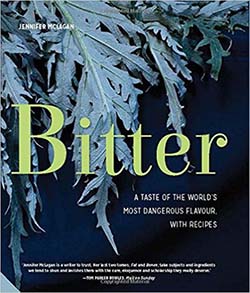 And yes, she has also written on bitterness, Bitter: A Taste of the World’s Most Dangerous Flavour, and if the presentation is anything to go by, it could be a great Christmas present for anyone interested in food and flavours.
Our response to bitterness, it would seem, is both universal and involuntary. Try it – is all but impossible to stop yourself screwing up your face when you taste something bitter. And there is a very good reason for it.
Plants protect themselves from being over consumed (and thereby killed) with bitter and often toxic chemicals so that we will not eat too much of them. Tastebuds (10,000 of of them scattered all over our tongues) pick up very quickly on that bitterness. How quickly will vary according to the individual with some people (including babies) being super-sensitive to bitter tastes. (Babies because they are so much smaller so it would take proportionately much less toxic chemical to kill them.) Super-sensitivity to bitterness can be inherited and can be influenced by what your mother ate when she was pregnant with you. But even if you feel you are super sensitive and really don’t like bitter flavours you can teach yourself to like them although it could take 10–15 goes before you start to appreciate them. (Just think, for example of how long it takes a milk chocolate lover or a lover of lattes to learn to love bitter chocolate or black coffee.)
Bitterness and acidity or sourness are often confused but they are absolutely not the same thing. Sour is just acidic but bitterness is made up of thousands of different compounds. Rhubarb or sorrel, for example, are often accused of being bitter but are only so when eaten in very large quantities; basically they are just sour. You can also increase or decrease bitterness by how you process a food; burning or roasting, for example, will increase bitterness.
Perception of bitterness is also affected by sound and by how you see the food. So, if you hear a high note while you are eating something bitter, it will reduce your perception of its bitterness whereas as a low note will increase your perception. Colour and shape will also affect your perception as the brain interprets these and sends pre-set messages to your taste buds.
So a food served on a dark coloured plate will taste bitterer as dark suggests ‘bitter’ to your brain; if it were served on a pale plate or, even better, on a red plate, that would reduce the perception of its bitterness as red signals ripe and sweet. Similarly food served on a soft, round plate will taste less bitter than food served on a hard-edged square plate.
Bitterness also signals health as the multiple compounds found in bitter foods are rich in phytochemicals and antioxidants. This is possibly why bitter flavours (such as alcoholic bitters) have become so much more popular amongst the health conscious over the last few years. Although there is some ground to be made up as the trend over the previous 40 years had been to ‘breed out’ the bitter flavours in fruit and vegetables thereby breeding out many of their beneficial chemicals. When did you last see a sharp white as opposed to a gently flavoured pink grapefruit, for example?
But in gastronomic, as well as in health terms, bitterness is invaluable. It adds complexity and interest to food, it stimulates the gastric juices, it cleanses the palate (think a sharp sorbet between two rich dishes or the bitter zest of an orange in a sweet orange dessert), it adds an element of surprise and it helps digestion. It is also ‘cool’….
Liking bitter suggests that you are cultured, sophisticated and just a tiny touch wicked….. I quote Jennifer McLagan of course!